
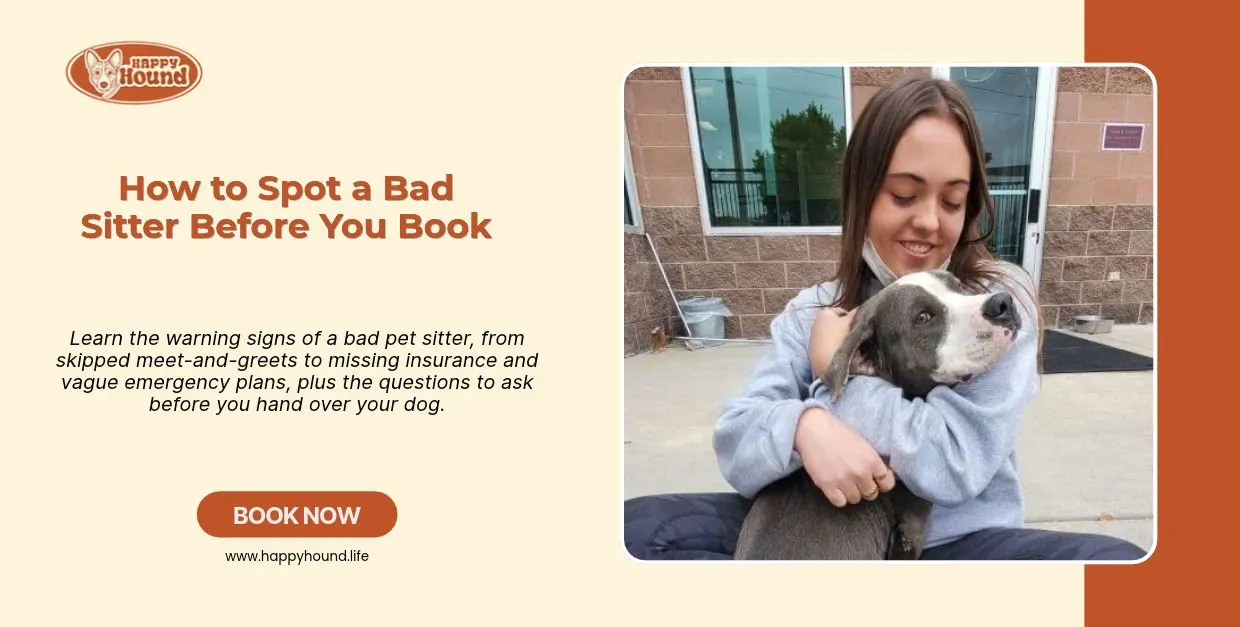
You’re about to hand over your house key and your dog to someone you met online. Most sitters are decent. Some aren’t, and the signs usually show up sooner than people expect. Here’s what to look for before you book, during the stay, and right after.
The First Messages Tell You a Lot
Say you text a sitter about a week-long trip. They reply in two minutes with a price and ask for payment details. That’s it. No question about whether your dog hates the vacuum, jumps the fence, or needs a pill with breakfast.
That’s a problem. A good sitter wants those details, because they decide how the job gets done.
Slow replies matter too. If it takes four days to get an answer when they’re trying to win your business, imagine how fast they’ll respond when your dog has an upset stomach at midnight.
Then there’s the meet-and-greet. Skip it and you’re guessing. A short visit lets the sitter see how your dog behaves, and lets you see how the sitter behaves. If someone won’t do one, move on. Pet Sitters International (PSI) also suggests asking if they use a written services agreement, so nobody argues later about what was included. And “I’m almost full, pay today to hold the spot”? That’s pressure, not a plan.
Paperwork
PSI’s interview checklist says to ask whether a sitter is insured and bonded, and to ask for proof. These aren’t the same thing. Liability insurance generally kicks in if your dog or your home gets damaged during the job. A bond generally protects you if the sitter steals something. Someone who says “yes, both” and then can’t show you one document has answered a different question than the one you asked.
Call the references. Yes, it’s awkward. Do it anyway. Same goes for first aid training or a background check, which PSI suggests should be no more than a year old. If you can’t verify a claim, don’t count it.
Rules about licensing differ a lot by state. Colorado, for example, requires many boarding operations to be licensed through its Department of Agriculture, though some small arrangements are exempt. Other states have nothing like it. Some cities add their own dog license or business permit rules. So ask the sitter what applies where you live, and if the answer is mush, call your state agriculture office or city hall.
Walks and Hikes
Walks go wrong in boring ways. A dog slips a collar. Two dogs don’t get along. The pavement is 130 degrees in July. A trail is iced over in January.
Start with group size. Five dogs on one person’s hands means your nervous dog is getting very little attention. Then ask about off-leash time. Rules vary by park and city. Some places want leashes everywhere, others allow off-leash only in certain areas or with a permit. A walker who unclips your dog without knowing the local rule is risking a fine for you and an accident for your dog.
Ask whether they check licenses and rabies tags. Plenty of places require both, and a careful walker will bring it up before you do.
After each visit you should hear something: a text, a photo, a two-line note. The Humane Society recommends asking sitters for exactly that. Also watch what they do about the weather. Hot concrete at noon or a sheet of ice on a shaded trail should change the plan.
Longer hikes? Ask where they go, how far, and what happens if your dog gets tired halfway up. One trial walk will tell you more than a sales pitch ever will.
Overnight Care and Boarding
Here’s the question: who is physically in the house at 2 a.m.? If the answer is fuzzy, or involves “a friend who helps out,” keep looking.
Ask what happens in an emergency. A prepared sitter can name the vet, tell you how they’ll reach you, and explain how they’ll get your dog there. If you hear “that never happens,” they haven’t thought about it.
For boarding at their home, check the yard in person. Low fences, sloppy gate latches, and gaps under the boards are everywhere, and an escaped dog is one of the most preventable emergencies in this business. If other dogs are staying, ask how newcomers get introduced and what happens when two dogs clash. And notice whether they ask for vaccine records. A host who never does may be gambling with every dog in the house. Requirements vary, so your veterinarian can tell you what you need.
Whichever boarding setup you choose, you should be allowed to see where your dog eats and sleeps. A reputable caregiver won’t mind.
After the Stay Starts
Some trouble only shows up once the job is underway. If the treats and toys you set out are untouched, the Humane Society says that can mean the sitter isn’t spending much time with your pet. A doorbell camera, or a neighbor, can confirm whether visits happen on schedule.
Watch your dog, too. Limping, drinking far more than usual, sudden fear, or a new cough after a stay all call for a veterinarian, not guesswork. Then ask the sitter what happened. Honest ones tell you right away. The worrying ones get quiet or defensive.
What a Good First Meeting Feels Like
You’re not hunting for perfection. You’re hunting for someone who makes you feel informed instead of sold to. They ask specific questions about your dog. They explain the agreement without being pushed. They answer insurance and licensing questions plainly. They actually watch how your dog reacts to them. If something nags at you after they leave, trust it.
FAQ
1. What is the biggest red flag in a pet sitter?
Refusing to meet you and your dog first. It’s hard to judge fit without that, and it often comes with other gaps.
2. Do pet sitters have to be insured and bonded?
Not everywhere. Professionals usually are, though. Ask for proof, not just a yes.
3. Are pet sitters regulated in the United States?
It depends on the state and the service. Some states license boarding businesses. A simple drop-in visit often isn’t covered by any license. Ask how the sitter’s business is classified.
4. How much should a dog walker or sitter cost?
It varies by region, visit length, number of dogs, and season. A price far below what others charge nearby can mean skipped insurance or rushed visits.
5. What should I ask before booking?
Insurance and bonding, references, the emergency plan, how many dogs they handle at once, and who will actually be with your dog.
6. What if my dog seems unwell after a stay?
Call your vet soon, and tell the sitter what you noticed.
Conclusion
Good sitters answer straight, welcome a meeting, and show their paperwork. Bad ones dodge, rush, or promise too much. Use this list the next time you need a walker, a hiking partner for your dog, or a week of overnight care. This is general information, and your veterinarian can advise on your dog’s health.
Looking for a Sitter in Boulder?
If you’re in Colorado, Happy Hound is a local option for dog walking Boulder, Colorado. Teddi Drummond offers dog boarding in Boulder at her three-bedroom home with a large backyard, and she can stay at your place for dog overnight care in Boulder, CO. She also runs a dog hiking service in Boulder and a general pet sitting in Boulder. Owners are invited to see the home and ask questions before booking, which is the kind of openness to look for in safe dog boarding services in Boulder. Rates and availability are on happyhound.life, or call or text 530-220-5242 with your dog’s details and your dates.